Sunday, 21 July 2013

Black magic-related crime and other anecdotes

My days at the Luangwa North Camp in the North Luangwa Valley have come to an end. It has been nearly two months since I arrived in this wonderful place at the beginning of June. So much has happened since my last post two weeks ago. Different groups of customers have been coming and going since then. It's been great to meet people who are so fond of nature and wildlife.

The other day, I saw my first black spitting cobra. We were on the safari car and spotted a long black reptile
about 30 meters away. As we got nearer, the cobra raised its head up completely adopting a menacing or rather defensive posture. A few seconds later, it ran away very quickly. It must have felt panic when facing a monster safari car like the one we were on. It was a beautiful animal and a pretty rare reptile to come across. What a privilege!


We also had a lion rambling at the camp the other night while we were sleeping. It was around 3 a.m. when some deafening roars awoke me. The lion was just below the bungalow where we spend the night. In the morning, the local employees at the camp explained that the lion wasn't alone. There had also been two lionesses around. The three big cats were apparently attracted by the impalas that sometimes graze in the camp´s grounds. Never ever I had been so close to a lion. Great experience!

There is plenty of these big cats in the valley these days. It is easy to find leopards as well. Today, on my last safari drive with the camp´s guide Szu and Merche, we came across a leopard less than 10 meters away. It´s such an amazing animal!They all come close to the river Luangwa for water and food looking for the best possible surroundings during the mating season. The other day, while we were opening a new route for safaris in preparation for new customer arrivals, we saw in the distance some vultures flying in circles 15 meters above some distant bushes. We approached the area. We got off the car. Our guide, Szu, spotted some fresh lion footprints as we got closer to the place. A few minutes later, we felt a very strong odor. We could then see what looked like a carcass in between some bushes. As we got there, we found ourselves facing the remains of a big adult male buffalo. It looked pretty fresh.
According to Szu, it had been killed not longer than two days before. There was enough meat for at least four adult lions for two days. We inspected the surroundings and also found fresh lion urine, a few hours old. The lions couldn´t be too far away. We got back on the car and kept going in search. About three hundred meters further down the road, we spotted them. Two male lions and a lioness. They were resting peacefully under some trees about 50 meters away from us. It was so cool to experience all this with a professional guide like Szu. He tracks animals down by observing the language of the bush. I have learned so much. Walking safaris is one of the specialities of Zambia and are certainly offered to customers here at the camp. It is without doubt a very different and richer experience compared to a more traditional safari drive. I highly recommend it.
 
During my duties as the camp´s cook, I get to talk quite often to Brighton and to some other members of the crew. And they sometimes tell me breathtaking stories. Last week, Brighton explained to me how his dad was killed by an elephant 32 years ago. Brighton was 9 years of age. His father was involved in local politics in his home village, Mebamba, not too far from where the camp is. One day, when he was returning from a local gathering in Chifunda, a nearby and larger village, the fatality happened. He was cycling. Apparently, an elephant that was feeding on some marula trees in the fields that separate Chifunda from Mebamba, started chasing him. He couldn´t escape. This is the story that he was probably told and I´m sure that there was some add-ons to it and speculation around it, as I don´t think that nobody actually saw what happened. But as he was telling me the story, I started to understand why Brighton, and many villagers that I´ve talked to these weeks, fear these big mammals.

A more striking story even is what we learnt four days ago. All the safari and lodge operators at the North Luangwa Valley are radio connected with the ZAWA (Zambia Wildlife Authority). As I was preparing lunch for customers with Brighton, we saw Boston, one of the other local employees, approaching the kitchen. I heard him talk to Brighton in Bemba, one of their local languages. When they finished, I asked what was happening. They explained that the ZAWA officers located at one of the park´s control gates had radio-broadcast a message. There had been a crime in Chifunda. A man had been killed by his own sons and daughters. They had apparently axed him to death. I couldn´t believe what my ears were hearing. I asked Brighton why. He told me a story of black magic that according to him served as a justification for these terrible events.

About a year ago, this man´s first wife was found dead. The village´s witch doctor determined that his husband had done black magic on her. His conclusion was based on the fact that he found a featherless dissected duck in his house. The man left the village. His sons and daughters were now abandoned without any parent to look after them. This same man did come back to Chifunda a few days ago, short after his offsprings took fatal revenge on him.

After hearing this story, not without a huge dose of shock, I asked Brighton what he thought about it. He said that we, Muzungus (white people), don´t understand because we don´t believe in black magic. He was convinced about his beliefs. When the rest of employees gathered around us, I could see that this belief in black magic was the common position for them all. I asked what was going to happen to all these sons and daughters of the assassinated man. They said that they would be arrested and trialed. At the end of the process, the judge would determine whether or not they'd be sentenced to imprisonment for the death of their father. Merche (my friend and one of the owners of the camp) and I then engaged in a discussion with them all about black magic, their beliefs, the existence of witch doctors, what science has to say about all this and so on. We didn´t get to any common ground in our different viewpoints.

Last Friday, we also learnt about the death of a lioness. She had wounds of buffalo horns. The lion is the only predator to buffalos in this park. Control radioed the camp´s scout (a rifle-armed member of the ZAWA that is responsible for the safety and security of the camp and during safaris). They requested him to go where the dead lioness lied in order to bury her. It is common practice that when fatalities like these happen, animal heads and paws are cut off by these officers before the rest of the body is put under ground. Poachers, although in minimal numbers compared to the 80´s and early 90´s, still exist. And unfortunately big money is still paid by undesirable people for poached or dead animals in this disgusting practice. Beheading and dismembering the animal, although terrible having to do so, at least prevents this shameful and illegal trade from happening.

Something more joyful, I´ve also been bird watching from the camp´s dining deck these last couple of weeks. The deck overlooks the river, which is a source of attraction to so many flying species. My favorites are the pied kingfisher, the saddlebilled stork, the cattle egret and the African barred owlet. I´ve alson been spending some time visiting the many beautiful lagoons within the park.


I am leaving the camp tomorrow morning. It's been a great experience here with Merche, Marie and all the employees, now my friends, Brighton, Derek, Isaac, Alfred, Jackson, Kennedy, Boston and the guide Szu. My travels in Africa continue. The next destination is Mpulungu and the Lake Tanganyka, in the North of Zambia, border with Tanzania. I hope I´ll be able to keep publishing more anecdotes soon. As always, thanks very much for reading and big hug to you all.


Friday, 5 July 2013

More adventures from the North Luangwa

The time passes by very fast at the camp. It’s been two weeks since my last post. So much has happened at the North Luangwa Valley since then. Two weeks into the winter, here below the equator line. The mornings and the evenings are still rather chilly.
However, from now on, we’ll relentlessly be approaching the summer season, not necessarily in terms of longer days and shorter nights, as this close to the equator the number of day light is pretty consistent throughout the year, but in terms of reaching much higher temperatures.

These days, as the river waters start to recede, I can see how the opposite shores are closing up on each other. Although narrower and narrower every day, the Luangwa will soon be the only source of water in the National Park, as it´s the only river that doesn´t completely dry up during the summer months. This means that the concentration of animals around us will be increasing, as the wildlife, especially the big cats; antelopes such as impala, kudu, puku, waterbak and bushbak; elephants and buffalos, come to drink. I love the breaks in between customer stays when we have some spare time to go on a drive or walk safari.
I’ve finally got to see lions, leopards and one of my favorite animals, the spotted hyena.

We also see wildlife all the time at the camp itself. A solitaire adult male elephant’s been visiting us a few times in the last couple of weeks. He comes around, probably attracted by the leaves of the camp´s acacia and mopane trees and the fresh grass from the dried lagoon on the east side. It’s huge.

The footprint of its hind leg was 52 cm of diameter, which indicates that his height must’ve been around 3 meters, from the ground to his shoulder. We could observe him very closely, at a distance of less than 5 meters, from the window of one of the bungalows, as he took his time to feed and move from one tree to another. We followed him at distance so that we could take some photos. As a precaution, the camp´s ranger, a member of the park´s security and safety squad, joined us with his rifle in case there was a dangerous charge from the elephant. I asked him why he was so vigilant. He answered that I had entered the dangerous zone in terms of proximity to the elephant, below 20 meters, while I was taking pictures. It’s easy to underestimate the risk when getting closer to these mammals. Albeit their size and weight, elephants are very fast animals. They can reach speeds of up to 60 km/h, and their reaction times are extremely fast.  It’s compulsory to have a ranger at the camp.
Their duties include going with the safari expeditions as well in case there is a dangerous situation, although rare, with animals that may pose a threat to customers.


One night we heard a lot of noise and cries coming not far from the camp´s west end. It seemed to be a lion attacking one of the hippos that inhabit the Luangwa. The next morning, we saw an injured hippo on the right shore of the river. Another 4 were around him, as if protecting him. Not far, a good dozen or so of crocodiles were awaiting their chance. This went on for a couple of days, the crocodiles looked ever more menacing each morning.

That morning I woke up especially early at 5:30 with the intention of enjoying the breathtaking sunrise. The hippo was already dead. His 4 companions weren’t guarding his body any longer. About 25 or 30 of those large reptiles were having a feast. They’d take big chunks of meat, chewing and gulping it with their mouths wide open in the air. Later at night, we could still hear the lion´s moaning roar, probably as if complaining about how unfair it was that he attested the killing strike for not being able to partake on the rewards of his effort afterwards.

Exposure to wildlife’s not only about big mammals. One night, after reading a few pages of ‘Bitterness’ by Zambian writer Malama Katulwende, I switched off my frontal light, lied down on my mosquito net-covered bed, and got ready for my sleep. It was very dark, as every other night. A few minutes later I heard something flying over my head. It flew and stopped in intervals. I wasn’t sure what it was. The thing was trapped inside the mosquito net. I covered my head under the linen and the pillow. I remained like that for several minutes while I kept on hearing those flying dives. It made me a bit nervous. After a while, I decided to get out of bed. I ridiculously stuck my feet out of bed to pull the mosquito net aside. The rest of the body followed. Afraid of being hit in the head by whatever that flying thing was, I was finally outside the bed and grasped my frontal light. I switched it on. And there it was, one of the many bats that abound the camp was unsuccessfully trying to fly out of the space created by the mosquito net as it protects the bed. I slid it up so that the poor bat could come out. After that, I went back to sleep and thought of this encounter for a few seconds. I somehow felt embarrassed for having been afraid of this harmless flying mammal. More embarrassing even if you compare my fear to its own. Bats are my friends now. There are at least 3 that sleep every night hanging under my bed. They come and go as they please. Their fast motion flies under my bed don´t bother me any longer.     


We’ve had several groups of customers staying in the lodge and going on drive and walking safaris in the last two weeks. I’m still looking after the kitchen and, more importantly, training Brighton. I´ve set myself up the challenge of helping him develop enough confidence for him to take full responsibility of it once I leave. We still have some challenges with communication, and misunderstandings still occur, almost every day. What I’ve learned is that I need to be very clear with him on what the expectation is, since his and my perceptions about cuisine are very different. How challenging it must be to ask someone to cook European style food when his cultural habits and traditions are so far apart! Nonetheless, I must say that I can see great progress. His level of interest is outstanding. And we still have so much fun while we cook together. Sometimes we even prepare meals outside, on the fire that they make with branches of mopane tree, we ask other members of the crew like Jackson, whom we name ‘the dancer’, Alfred and Isaac to join, and then play the drum and dance while we cook a traditional Zambian meal that consists of Nshima, beans, beef stew and cabbage. They're all great guys!


I’m still enjoying my days here. When the night falls, the busy day at the camp has set you for a good night sleep. The sounds of the bush, the wildlife at night, the wind breaking through the trees that surround the camp create a very relaxing environment that has a soothing effect on my sleep. Every morning, I feel really rested and ready for new adventures. I hope you did enjoy these ones and that you look forward to more in my next post coming soon. Thanks so much for reading!

Sunday, 23 June 2013

Life at the Luangwa North camp

I arrived at the Luangwa North camp on June 7th. My friends Merche, Myriam originally from Spain, and Marie from France, owners of the travel agency Feeling Africa, have this safari lodge in the middle of the North Luangwa National Park in northern east Zambia, 5 hours drive from Mpika, the closest town.

The place is wonderful. One of the best times of the day is the sunrise. The camp´s dining and bar area has a deck overlooking the river and is facing to the east. These days the sunrise occurs a few minutes after 6 am. Just moments before, the horizon starts to be painted with the typical orange and pink colours that announce that the sun´s about to rise above the trees at the far end of the river. It then shows itself and iluminates the river with its blinding rays. It´s an amazing spectacle.

The camp lies on the shores of the Luangwa, where hippos and cocodriles abound. It´s environmental friendly. It functions with solar energy 100% of the time. The river is the source of all the water needs. It has 4 en-suite bungalows that serve as accommodation for customers. They stand at some 4 meters above ground level. They were built using local materials such as ebony wood, bamboo canopy and straw from the bush. The furniture such as bed frames, shelves, tables and sofa-chairs in the bungalows are beautifully designed with typical African and bush themes. They look astounding.


Two of the camp´s en-suite bungalows


Due to the expansion of the business, a new area comprised of 3 more basic bungalows and shared bathroom and shower facilities are being built at one of the far ends of the camp. The local staff are really skillful when it comes to working with wood. I´m amazed with the speed at which they´re expanding the camp´s facilities.

There´s always work to do at the camp. Maintenance of the premises and the surroundings is an ongoing activity. Two French friends of Marie are here as well. Their help's proving to be fundamental. Erik's a reputed professional in the field of tag measurement systems with great knowledge of electricity. Lillian is a diesel engines professional and world traveller. They are both making a huge a difference to get the camp ready for this season. There are also 7 employees, all employed from the local communities that surround the camp. Their names are Isaac, Brighton, Boston, Kennedy, Derek, Ibean and Alfred. There´s an 8th member of the crew named Jackson, who´s currently on vacation.


Without their hard work, I think this camp couldn´t exist. The days start very early, normally at 6 am, or even 5 am when we need to have breakfast ready for the customers to go on a morning sunrise safari. I´m responsible for the kitchen as the camp´s cook. I´ve always enjoyed cooking so I thought that this was the best way I could help my friends out this season. I´m happy with the daily cooking duties, although I must confess that doing it for 10-12 customers is pretty challenging. I´m also training one of the staff members. He wants to become a chef one day.

Brighton´s showing a great deal of interest in cuisine. He´s a 41-year old Zambian originally from Chifunda, a village one-hour drive from the camp, on the other sie of the river Luangwa. He´s father to 5 children, 3 boys and 2 girls, who live with his wife in Mabamba, another village 2 hours and a half drive away. He used to be a safari guide until he was in a pretty serious car crash 3 years ago. His uncle, who was drunk driving, was the one to blame for the accident. Since then, Brighton has a handicapped leg and had to give up his original profession.

Brighton´s especially good at baking bread and cake.
Every time he bakes bread, which he does in the wood oven that we have outside the kitchen, he tells me: 'Enrique, this is bush bread'. I have a lot of fun with Brighton. We listen to music while we cook or talk about random topics of Zambian life and their traditions. I sometimes hear him hum songs. On day I asked him about the song he had in between his throat and teeth. He told me that it was the Zambian National anthem. 'Stand and Sing of Zambia, Proud and Free'. A few days later he had its lyrics written down for me in both English and Nsenga, his mother tongue.

I normally prepare a dish having Brighton to observe me. If the dish is good enough, I write down the recipe for him. He told me that this helps him remember what he saw so that he can try one or two days later.  One evening, I asked him to please prepare dinner. The menu was onion soup as the starter and croquettes as the main course. I had made the mass of the croquettes a couple of days earlier; aubergine and onion. They just had to be rolled up, dipped in beaten egg and covered with breadcrumbs before being deep fried. I explained everything, prepared all the ingredients for him on the chopping board and left him on his own in the kitchen. One hour later, he called me to go check. He showed me the soup and asked me to try. It was good but had an odd taste, not the onion soup that I remembered. I then asked him where the croquettes were. He told me that he had put the mass of the croquettes in the soup. Obviously he had misunderstood or I hadn´t explained myself properly, or he pretended that he didn´t understand correctly so that he could go join his work mates to have their own dinner at the staff's premises.

I couldn´t believe it. I swallowed the sudden and slight frustration and smiled at him and said not to worry. After all it didn´t taste so bad.

That night we had soup and mass of croquettes all in one dish. Merche, Marie, Erik, Lillian and myself joked about over dinner. Anecdotes like this happens almost every day at the camp, it´s great fun, and make the days go by very fast. It´s been over two weeks since I arrived here. The first customers of the season have already being arriving. It´s becoming quite busy. And all in all a very enjoyable experience so far.

We´ve finally been able to connect to the Internet via satellite. I hope it´ll last so that I can keep feeding the blog. Enjoy for now and thanks very much for reading!


Wednesday, 5 June 2013

Zambia is an interesting country!

My engagement with Laura has been the highlight of the trip in Zambia so far. And I doubt that anything else happening in this interesting country will be able to match what I felt when she said yes. Many more things worth mentioning have occurred since my arrival on May 25.

As you know, it's not my first time here. I spent over 3 days in Livingstone last year. However, all I did back then were the typical touristy things that make Livingstone so attractive to the tourist: visit to the Victoria Falls, the bungee jump, rafting on the Zambezi River etc. Three days in a country isn't enough to even scratch the surface. This time, and so far, I've already been a bit closer to what is real Zambia.

Zambia's still a poor country. If by poor we mean taking in consideration western standards. According o an article that I read on The Times Zambia newspaper, the country's one of the highest illiterate rates among Eastern and Southern African Estates, and a very small proportion of primary school students reach adequate levels of knowledge in both maths and English. One day, on a 8-hour bus ride from the capital city Lusaka to Kitwe in the Copperbelt region, I had an enlightening conversation with the man sitting mext to me. He was in his mid thirties and on his final year of his bachelor degree in civil studies. He told me that he'd been saving for nearly ten years in order to afford the 10,000 kwacha/year college fee (roughly 1,450 EUR). In order for him to be able to afford this last year of studies, he had to sacrifice her 17-year old daughter's secondary school year with the promise that she'd resume after he completed his degree. The man named Victor, showed me a very harsh sms where her daughter threw at his face the fact that she thinks that he prefers his own education to hers. He kept telling me that he's in a privileged economic situation compared to the majority of Zambians, and even so, he could only afford one meal per day instead of three in order to achieve hid\s dream of graduating from college.

The Government only provides free primary school. From the age of 10, families have to pay for secondary school, those who can, apparently not many, and not to mention higher university education. It's believed that access to education for the general population is a must for a country to have an opportunity to develop, something that's a real challenge in Zambia. A great majority of the population still lives in a subsistence economic system, living in small villages that don't have access to electricity, clean water and not to mention health services. However, cities like Livingstone, Lusaka, Kitwe, Ndola and Mpika are showing a very promising level of tourist, agricultural, commercial and industrial development. It's a country of immense opportunity that I'm sure will find the means to overcome its challenges.

The Copperbelt region, 6 hours drive to the north of the capital Lusaka, for instance, with Ndola and Kitwe as their two main cities, has been attracting large foreign investment in the form of enterprises locating in the region for copper mining. The main investors are Chinese, Australian, US and South African firms. The Government provides licenses for the exploitation of this natural resource. The conditions are that the firs employ Zambians and that they engage under the Corporate Social Responsibility 9CSR) program. This is basically the destination of private funds to fund apprenticeship and education programs for the population. It's a good initiative. However, I think that it can increase the regional differences between those who have access to education and apprenticeship where exist these natural resources.

Zambian people are really friendly. And peaceful. they laugh and smile a lot. There are 73 different ethnic groups governed by their own Chiefs, who at the same time co-operate with the Prime Minister of the Republic. There's never been a civil war between any of these ethnic groups. One of the few, if not the only, African countries. In their friendliness, expect to bargain with them. When they see a foreigner, they assume they can get more money off you. This happens with taxi drivers. in the local markets and even in shops where the price of the items is not listed. They even try to get more money from you even when they've screwed up.

Like the day in Livingstone Laura and I got the restaurant where we were having dinner one night to call a taxi so that we could go back to our lodge one night. The taxi came. It was midnight. After five minutes, I could see that the driver, named Peter, was putting the engine in neutral while going downhill. I presumed he was saving petrol. Two minutes after, the car ran out of fuel. It stopped in the middle of the road. It was completely dark. We were surrounded by bush. There wasn't any lightning on the road. Mo other car to be seen around. he tried to start the engine several times with no joy. He then decided to phone a friend to ask him if he could bring some fuel to refill the tank and get us going. We waited in the car for 45 minutes. Several cars passed by but didn't stop. The friend came and put some liters in the tank. Peter dared to ask us for money to pay his friend. We refused.

He was able to start the car again. I don't know if he was tired, drunk, stoned or wgat, but straight away, the car started going to the opposite side of the road. After a couple of seconds of Laura and I shouting at him, he got control of the car and directed it back to the right side of the road. That was a scary moment. Five minutes after, we got to our lodge. I had an argument with him. I gave him a little lecture on the dangers of driving without petrol and specially the latter incident. I said that I'd report him to the restaurant so they'd stop doing business with him. he still wanted to get paid for his services. I felt pity for him so gave him some small money to at least help him cover his expenses. We hadn't panicked at all; I've come to realize that both Laura and myself are able to stay cool in such situations and worse. It certainly helps. But we probably need to be more cautious on what car we get onto in the future.

Something I am amazed by is how easy is to get connected to the mobile network in Zambia.You can buy sim cards and 'airtime' (pay-as-you-go credit) almost everywhere. From official operator centers to petrol stations, little kiosks off the main roads or small traders who are everywhere to be seen with their little tables and stools or wandering around in search of random customers. The other day I even saw some fruit sellers selling airtime in the local market. There are three main mobile operators: Airtel, MTN and Zamtel. I chose Airtel as it seems to have the largest coverage nationwide. This is my number in case you want to surprise one day with a nice sms or phone call :-) + 260 97 9644 7577

Traveling buy bus between towns is an interesting experience. So far I've done Lusaka-Livingstone, 7 hours; Lusaka-Kitwe, 8 hours; and Kitwe-Mpika, 10 hours. there's no single lane motorways in Zambia. All paved roads are doucle direction, which makes bus rides much longer. Driving in Zambia reminds me of 10 years ago in Turkey where you'd see cars, trucks and even coaches overtaking and expecting the other vehicles to make space for them when another vehicle comes on the opposite direction. It can be a bit scary, although you get used to it.

In a couple of occasions I've experienced sellers of water, soft drinks, sweets, dried nuts, smoked sausage, anything, getting aboard and sell to the thirsty and hungry passengers. It's also interesting to see a preacher bringing the Word of the Lord and blessing the journey before the bus heads off. Most of these preachers do it for a living. Zambia is a Christian country, Catholics beings the largest group, but also Protestants, Baptists, Pentecostals etc.

There's something else. I've got my own work permit. I'm going to be volunteering for my friend Merche, Marie and Myriam of Zambian-based travel agency Feeling Africa. They have a safari lodge in one of the most remote National Parks in the north-east. It's called the North Luangwa valley. Recent regulations require that also volunteers have their own work permit. I'll have to be renewing it every month. I'm required to go to the nearest immigration office to get my papers extended and my passport stamped up. Failing to do so implies huge fines and even imprisonment. I'd better not forget to do so.

we've the first customers arriving at the lodge pretty soon. There's plenty to do to get the lodge ready for their arrival. I can't wait to get there. be in the middle of the bush and nature, surrounded by wild animals, away from the civilizations as we understand it. I hear it's an amazing place with beautiful sunrises and sunsets. I hope I'll be able to tell you about my experiences there in the nest post. there's no Internet connection over there, so it might have to be the next time I'm at Mpika, the nearest town, where we have to come for groceries and supplies for the lodge. The trip takes 5 or 6 hours by 4x4 each way. Stay tuned. Thanks for reading!

Tuesday, 4 June 2013

We're engaged!

Who was going to tell me that the Chilean girl that I met in April 2012 in Livingstone (Zambia) would become my fiancé? What are the odds of a Spanish guy who lived in Ireland meeting a Chilean girl who lives in the US in Zambia? Laura was doing some research work for her doctoral thesis in Livingstone while I was traveling through Kenya, Tanzania and Zambia. We met through our friend Merche, co-founder of Zambian-based travel agency Feeling Africa. Just three days before I had to go back to Ireland at the end of my vacation.

Ever since, Laura and I have been in contact via email, Skype, FaceTime. That's how we really got to know each other, through conversations that sometimes lasted up to 4 hours. It didn't take me too long to realize that there was something very special about Laura. I visited her in Missoula (Montana), where she lives, in June 2012. We spent 12 great days together before I had to go back to Ireland. We went back to our friend FaceTime, day after day, until the next time we could spend some time together. This time it was in Boston, on our way to a wedding of one of Laura's friends in Maine in August 2012.

Every time I spent with her, I was more convinced about my feelings for Laura. Every time we had to depart from each other, I didn't feel sad for the distance between us that would follow. In fact, I was happy and felt lucky to have met her. I also knew that there'd be a next time, and that helped me cope with the circumstances of long distance pretty well. We always had and said that FaceTime was our friend!

The next time we met was in Europe. Laura got permission from her university to come to Ireland for over 3 months in November 2012. Writing the thesis is the last stage she needs to complete in order to obtain her Phd. She could work on her thesis from Dublin. We had a great time together. While in Dublin, we visited Rome, spent Christmas with my family in Madrid, and went to visit my extended family in Seville. All this took us to the end of January 2013.

Short after that, I had to start taking steps to break the distance between us. I liked the idea of making a move to the US and be close to her. I suggested this to her and she loved it. For me that was enough to make a final decision of leaving Ireland. And also use the opportunity to take some time off to do something that I had always wanted to do. Travel. What she didn't know at the time is that I also intended to propose.

What followed were weeks of planning and trying to arrange things so that I could propose in the same place where we met, in Livingstone. In the late afternoon of the special day, we did a micro-flight over the Victoria Falls. This was Laura's first anniversary present. The Falls are an amazing spectacle from the ground at the National Park, so massive, powerful, the sounds and sprays created by the Zambezi finding its way down the gorge to continue its course. However, from up in the air, they're even more impressive. You can see them from a completely different perspective. It's spectacular. The first thing that strikes you is the width of the river as it approaches the main gorge at the point where the Falls are formed. The colour of the water, all the vegetation and plains that surround the river and that extend to a point where your eyes meet the horizon, such is the vastness below. The small islands, some elephants drinking from the river and hippos enjoying a bath in its waters. 


As the micro-plane approaches to just four hundred meters of the main gorge, you feel the strength of the water falling, the sprays formed can almost touch your face, the striking sound makes communication with the pilot through the micro-plane's internal radio system nearly impossible. And you can see the total width of the falls at their full splendor, the waters zigzagging through the gorges as they continue their course, and the bungee jump bridge that separates Zambia and Zimbawe. All these marvels from up in the air with a beautiful sunset lightning.

After we landed, we went to the Royal Livingstone Hotel, on the Zambian banks of the Zambezi River, just a few hundred meters from the waterfall. We enjoyed the changing after-sunset orange, pink, violet, red colors as the night fell down while having a cocktail at the sunset deck. 


After that, we wandered around the hotel grounds for some minutes before suggesting Laura that we had dinner at the hotel's restaurant. Laura didn't expect it. I insisted. We were seated at a nice table in the roofed open terrace overlooking the darkened river and the hotel grounds. There was a very pleasant guitar music being played live in the background. A very polite waiter would serve the table for the next two hours. We both ordered Zambian traditional food; grilled whole bream with Nshima and a sauté of sweet potatoes leaves and tomatoes. Nshima is the Zambian staple food. It's made of maize flour mixed with water. The taste is very plain. It's Zambia's everyday bread. As starters, Laura had a salad and I a carrot and pumpkin soup. We watered everything down with a South African coupage white wine bottled exclusively for the Royal Livingstone, or at least that's what we were told.


While we waited for our food to arrive, we saw a group of zebras passing in front of us. This hotel keeps zebras, giraffes and monkeys at their grounds, so it's quite common to come across this sort of parades while you're at their premises.

I still didn't know when I would propose. I was still waiting for the right moment to arise. We finished our main course and the waiter asked us if we wanted to see the desserts menu. We had a look and fancied the plate of assorted desserts to share. As if everything was written in the stars, the waiter advised that it would take 20 minutes for it to be ready. This was the time when I thought that I'd ask Laura to go stretch our legs while we waited. It was such a pleasant starred night. We came to a second sunset deck by the river. We stood looking at each other, hugged, enjoyed the moment. And it was then when I took the ring in its box and placed it on Laura's hands. She looked at it. My heart was beating very fast. It took a few seconds for Laura to react. Seconds that seemed minutes to me. Then she said, 'its a box', and I said, 'Yes, do you want to marry me?' I opened the box, took the ring out and slid it in her finger. It fitted perfectly. A ring that had flown from Madrid to Dublin, then to Missoula and finally to Zambia. She said nothing but kissed me, tears dropping from both our eyes. We stayed like this for a good few minutes. We both knew it. But she hadn't said yes yet. I had to tell her that she hadn't answered. Then she said yes and we kept hugging each other until we heard someone say 'Congratulations', a young woman with a group of two or three others who came to contemplate the river at the deck.

It was very special. I felt so good. Laura told me that she hadn't any idea that I'd propose. Days earlier she had randomly been telling me how difficult it's to surprise her as she seems to be gifted in always finding out about surprises that other people prepare for her. All the waiting, preparation and planning for it to be at the place where we had met nearly 14 months earlier had been worth it. From that moment onwards we were not 'pololos' (in Chile), 'novios' (in Spain) or boyfriend/girlfriend but 'novios', 'comprometidos' or engaged. Or as we decided later, we started calling each other 'my fiancé'. My heart is full of joy. I'm a lucky man! Laura is a wonderful woman!

She's now in South Africa attending a conference before she goes back to Montana. I remain in Zambia where my travels continue. 


Monday, 27 May 2013

A journey odyssey (From Missoula to Livingstone)

The so long awaited trip to Zambia started early on Friday 24. The night before, we met some of Laura's friends for a pre-Zambia drink at a cocktails bar called The Montgomery Distillery in downtown Missoula. They serve really nice cocktails with really cool names. I had a 'The Dude Abides', a white russian named after the film The Big Lewoski by the Coen Brothers. This was followed by a nice dinner at the Biga Pizza restaurant next door. It wasn't a late night as the alarm clock would go off before 4 am.

The first flight to Minneapolis was at 5:50 am. As a frequent Delta customer, Laura got an upgrade to first class, so we didnt sit together. I always ask for the aisle seats when I can. A man sitting next to me tried to engage in a conversation three times. I behaved evasively as I didnt feel like talking so early in the morning. The flight was a mere 2h40min. I used it to snooze and read an ebook about the adventures of an English family in Africa, starting with their first few months in Zambia.

We arrived at Minneapolis St. Paul's airport with no delays. Lindbergh Terminal 1 is a very modern and busy one. As we had over 5 hours lay-over until our next flight, we decided to get out and go discover Minneapolis. The best way to hit downtown is by light rail. It's fast and convenient, it serves both terminals, and for just $1.75 is an easy way of getting to town.

Minneapolis is home to the famous Mall of America, the second largest in the US, and the Minnesota Vikings Football team.  The buildings around the main Washington Avenue are interconnected by a network of skyways, which is quite common in cities where winters are very cold. The Mississippi River divides the city and creates a very pleasant area for terraced coffe shops, bars, restaurants and recreational areas for walks and runs. Its streets are very clean and are dominated by a fairly large number of modern glassed skyscrapers. There's a nice skyline view from the south bank of the river by the Historic Stone Bridge where Nicolette Island is.


It just takes two hours to get a flavor of what the city looks like. After that, we made our way back to the airport to jump on our next flight to Amsterdam. This second flight of the day was a longer one. Over 7 hours. Laura and I sat together this time. I continued reading my ebook, the next chapters narrated their experiences in Zimbawe. I also enjoyed watching two good movies compliment of Delta's entertainment system: 'Ruby Sparks' directed by Jonathan Dayton and Valerie Faris, and 'The perks of being a wallflower' by Stephen Chbosky.

After two movies, some games, a bit of ebook reading, two meals, plenty of snacks, some short naps and random chats with Laura, we arrived in Amsterdam. The 11 pm US time had become 6 am CET due to the time zone difference. The initial plan was to take the short distance train into the city to kill some of the four-hour-lay-over before our next flight. However, we thought it'd be too tight and decided to stay at Schiphol airport and enjoy Laura's Delta membership, which allows her and a companion access to KLM's lounge. It couldn't  have been a better decision as we could have a great breakfast, a refreshing shower and relax for a while before our journey odyssey continued. 

The next flight from Amsterdam to Lusaka, via Harare went pretty fast. I was really tired so I slept for most of the 10-hour journey. This included a 1 hour stop at Harare, capital of Zimbawe, where we were asked to remain aboard the aircraft.  After some passengers got off the plane and some others got on, we took off for our last flight segment to Zambia. At around 10:30 pm Zambia time, we landed. Upon getting off the plane, I sensed a familiar smell that I remembered from my trip to Africa last year. I was happy!


Going through immigration to obtain the tourist visa was pretty fast. It costs $ 50. After getting the passport stamped, our luggage was already out of the luggage belt. We loaded it on our backs and came out of the terminal. We had arranged a shuttle service to bring us to the hotel where we'd stay for the night. The next morning we had a comforting breakfast before heading to the buses terminal to take the coach down to Livingstone. This was somehow chaotic. A taxi took us there. 

On arrival to the bus terminal, there was a bunch of random young men asking where we were going and offering us help to obtain the bus tickets to Livingstone. This literally meant opening the car boot to take our luggage out, grabbing our bags and quickly bringing us to a pseudo ticket office 5 meters away from where all the buses were starting their engines in the middle of people rushing, shouting and going around systematically. We were kind of worried that we'd be ripped off or that our bags would disappear. However, we found out that all these men wanted was to choose a trip on our behalf so they'd get the commission from the coach service company. Cash was handed out to the guy who was the fastest in grabbing our bags and bringing them to them where we bought the tickets. Two minutes after we were putting our bags in one of the bus' luggage compartment and getting on the bus, which was already in motion. All this happened in less than 5 minutes; organized chaos!

The bus journey lasted 7 hours and included two 15 minutes toilet stops. It's a nice way of getting a good sense of Zambia. We passed by little villages where people live in thatched huts, shepherd their cows or goats, and grow maize. We also passed by larger towns like Kafue, Mazabuka, Monze, Pemba, Choma, Kalomo and Zimba, where we could see a further level of commercial development, greater as we got closer to the jewel of tourism that Livingstone is. However, all in all, my first impression is that Zambia is still a quite poor country, in terms of western economic standards. I can tell that a large proportion of Zambian people still live under a subsistence economy.

After nearly 60 hours since we left Missoula we arrived in Livingstone. A sense of relief arose. Laura and I were finally back at the place where just over 1 year ago we had met. We met our friends Merche, Miriam and Marie, owners of Feeling Africa, for a bite to eat and local beer Mosi. It was great to catch up with them!


They were great in giving us a lift to the lodge where we're staying. It was late, dark and chilly. We slept tight and woke early this morning to come across a wonderful setting by the river Maramba, where we've had breakfast at the spectacle of several playful monkey families eating and jumping on the trees across the river. Paradise!


Tuesday, 21 May 2013

Missoula

After just over two weeks in Missoula, all I can say is 'great place to visit'. This is where my girlfriend Laura lives. It's not my first time at this enjoyable town. I spent just short of two weeks in June 2012.

According to official census data, Missoula is the second largest city of Montana. It's name, 'nmesuletk', which can be translated as 'place of frozen water', comes from the Salish language of the Flathead Nation, and in reference to the Glacial Lake Missoula that could be once found in the valley. These facts and further details can be found on here.

One of the the first things that I have appreciated about Missoula is that it offers great outdoor recreational activities. People in Missoula, and in Montana in general, have a special love for being outdoors. You can also notice how serious they are about maintaining and preserving their natural resources. This allows for great hiking and trail running in the nearby mountains, and water sports on the Clark Fork River including kayaking and river surfing. There are also great opportunities for cycling, skiing, fly fishing and hunting.
Kootenai National Forest

I'm trying to recover from a long lasting calf injury. I'm happy that I've been able to get three good trail runs in this week. The pretty flat main trails of the Rattlesnake Recreational Area, the first miles of the Hellgate Canyon along the river, and the not so easy uphill run to Mount Sentinel are helping me get back on track with my runs.  Laura is a runner too and a great support for my recovery! Those runs along with several hikes with her and some cycling are doing me so good.

After all this exercise, I don't feel any guilt to kill my thirst with beer. Listen beer lovers if you're ever around in this town. Something Missoula can be proud of as well is its microbreweries. The Kettlehouse, Tamarack, Bayern and the Draught Works, for instance, make wonders of this fantastic beverage for the enjoyment of the locals and visitors alike. You can enjoy a pint in their tap rooms for $4 in average. As a lover of stout and Guinness after 13 years in Ireland, I can recommend the Milk Stout by Draught Works. Or if you venture 20 minutes drive out of Missoula, you can have a pint for as little as $3 in for instance the Wildwood Brewery in Stevensville. I found that the Organic Karapiller Red Lager was especially tasty.

Sampling beers at Wildwood Brewery


Brewpubs are only open until 8 pm. Based on Montana law, you're only allowed to have 3 pints in their tap rooms. Alternatively, you can bring your own growler, which has capacity for just over 3 pints or nearly 2 liters, to get it filled and bring your beer for its enjoyment at home.

Not only beers brewed in town can be found in Missoula. Following the good Montana tradition for a large variety of beers, most pubs and restaurants have a good choice of 'cerveza' coming from other parts of the State. One that pleasantly impressed me the other day was the Imperial Ale Good Medicine from Great Northern Brewing Company. It had a pretty rich malted taste perfectly balanced with the right amount of hops for someone, like me, who's not so fond of beers that are too hoppy.

Missoula is a great location to access two wonderful National Parks a few hours drive away from the city. Glacier National Park and Yellowstone National Park are two gems to be discovered. I was lucky to be able to visit and camp at Glacier already last year during my first visit to Laura. What impressed me the most was the dramatic mountains, panoramic views, lakes and the friendly bighorn sheep.

Last week, Laura arranged to go visit Yellowstone with two friends of hers, Courtney and Ben. We camped out for two nights. Very different to Glacier, to me Yellowstone's highlights were the colorful and lively geysers. The area given the name of the Old Faithful is probably the best known and most popular due to its timid but regular eruption. It was the eruption of the Grand geyser the one that I will always talk about though.


Norris Geyser Basin

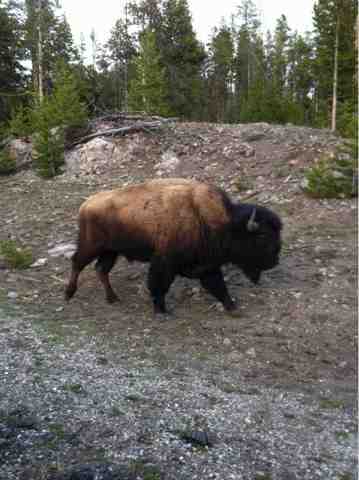
Other things that I loved about Yellowstone were the geysers from Norris Basin, the Grand Canyon and the abundant wildlife that we came across: loads of buffalo, a black bear, three grizzly bears, moose, one coyote, pronghorn, marmotte, beaver and osprey, many of them I had never seen before.

Grand Canyon of Yellowstone

Buffalo


And all these things and many more that I could be writing about have kept me pretty busy, including Laura's doctoral graduation ceremonies and celebrations over the weekend. Congratulations, Laura!

We're now getting ready for our trip to Zambia this Friday. I'm so excited about it. The next post will be from somewhere in Livingstone. Thanks for reading!